Catch the sun between the shadows.
Explore RV solar, from roof space to campsite shade.
An RV roof has limited space, and a sunny parking spot can change through the day. Use the RV scene to explore where panels fit and how orientation, obstructions and loads affect modeled energy.
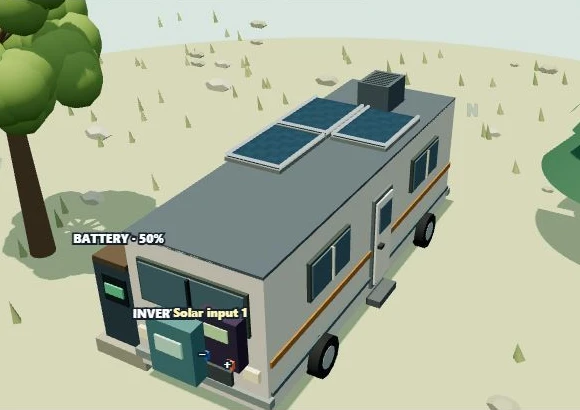
Start with the roof you actually have
The RV scene has a flat roof and a modeled roof air conditioner. Measure your usable roof length and width and the dimensions of the panels you are considering. The model checks placement against its roof geometry; it does not survey your vehicle or reproduce every vent, antenna and rack.
- Open the RV setup draft and review the off-grid system choice. Enter measured dimensions, approximate latitude and the direction the RV faces.
- Review panel count and physical size. The starter arrangement is a demonstration; reduce it if it does not fit your vehicle.
- Use the connection planner to suggest or enter strings, then review input limits and warnings. Unconnected panels contribute no output.
A campsite is a time-of-day problem
Move the trees, set their height, crown diameter and foliage, and inspect the roof at different solar times. Change the date to explore a different sun path. Use Shade loss (%) for the modeled reduction in incident light; use a completed Run day to examine energy. A rendered shadow or one noon reading cannot establish a whole day's yield.
The shading guide explains why optical shade and electrical losses differ. This is a stationary campsite scenario: travel, changing parking locations and driving-related charging are outside this workflow.
Enter the loads you need to serve
Replace demonstration appliance watts with your own values and daily schedule. Check the household baseline too, so the same demand is not counted twice. Battery capacity, starting charge, inverter output and load timing affect whether the modeled system serves the day or leaves unmet energy.
Power in watts and energy in watt-hours answer different questions. A battery with enough stored energy can still face an output limit. The simplified model does not establish surge capability, battery-management behavior or installation suitability.
Keep exploring
Classic Solar Optimizer · Solar Schema · Original training videos